

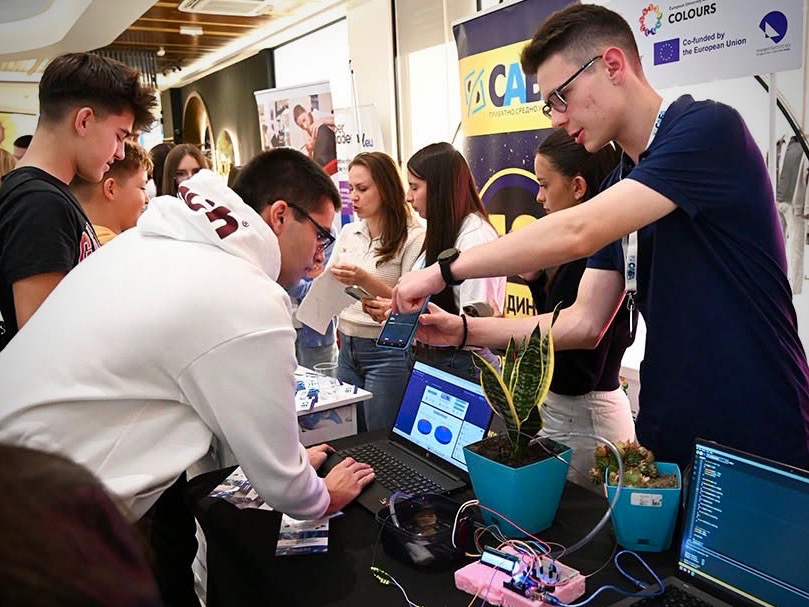
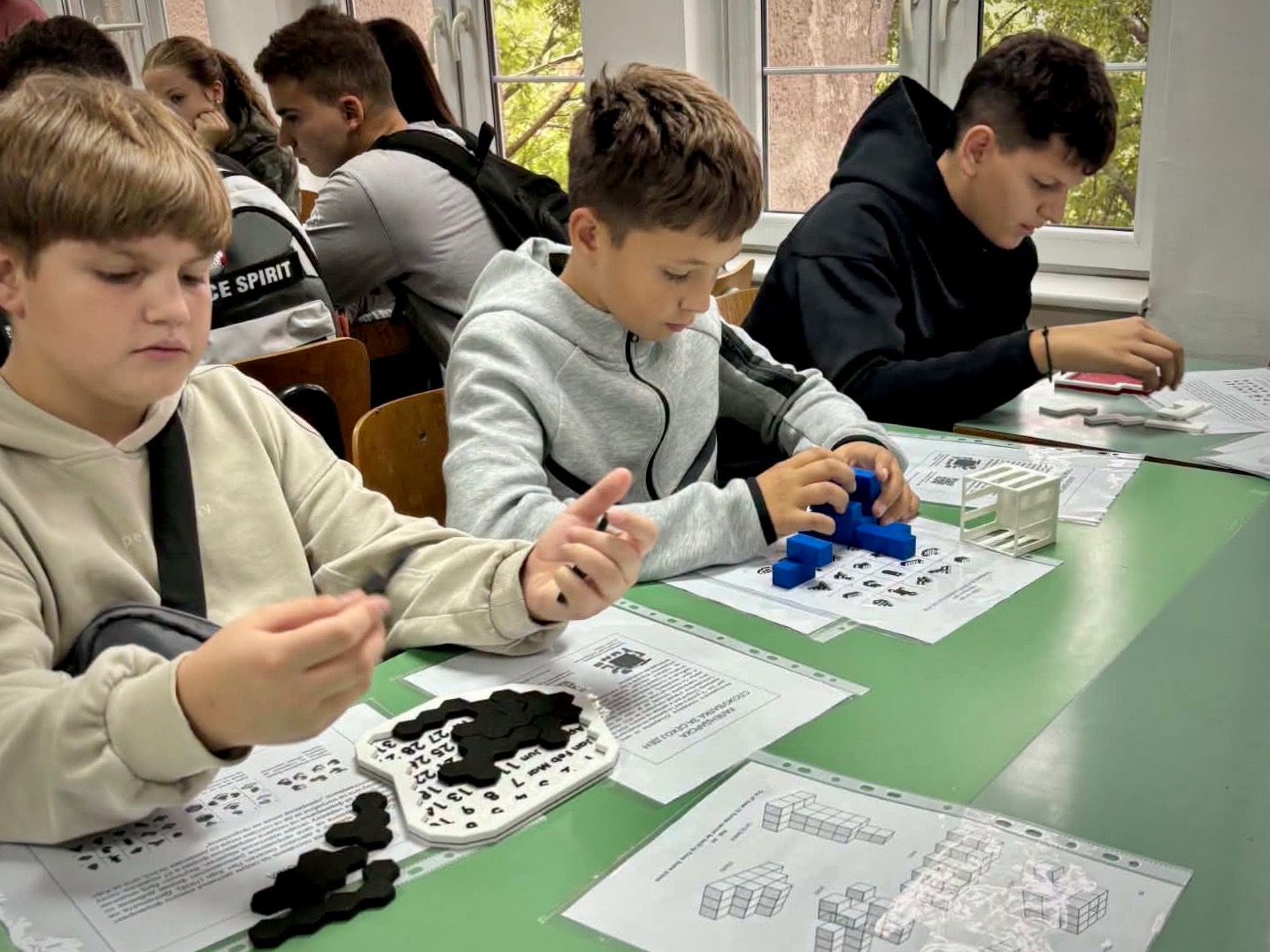
From robotics, artificial intelligence and renewable energy to astronomy, botany and scientific experiments, European Researchers’ Night 2026, held on 25 September, offered more than 85 interactive activities, turning Skopje, Bitola, Štip, Ohrid and other cities into places of exploration, learning and discovery.
European Researchers’ Night is part of a European initiative that brings science closer to the public, creating opportunities to meet researchers in person and learn about their work. This year, through workshops, scientific demonstrations, exhibitions, public lectures, laboratory visits and interactive games, visitors had the opportunity to ask questions, experiment and discover how scientific research affects everyday life.
The Europe House network also joined the initiative in support of its overall goals, creating additional opportunities through its centres across the country for young people and the wider public to discover the world of science and experience it in a different, more interactive way.
The events were organised as part of the CHOOSE SCIENCE – “Building Society through Research and Innovation” project, supported by the European Union through the Horizon Europe programme and the Marie Skłodowska-Curie Actions (MSCA). The project is coordinated by Ss. Cyril and Methodius University in Skopje (UKIM), with the participation of the Macedonian Academy of Sciences and Arts (MANU), St. Kliment Ohridski University – Bitola (UKLO), Goce Delčev University – Štip (UGD), the Macedonian Ecological Society (MES) and other partners.
Skopje: From Robotics and Artificial Intelligence to Botany and Astronomy
In Skopje, UKIM’s faculties opened their laboratories and classrooms to visitors, offering a glimpse into the world of contemporary research.
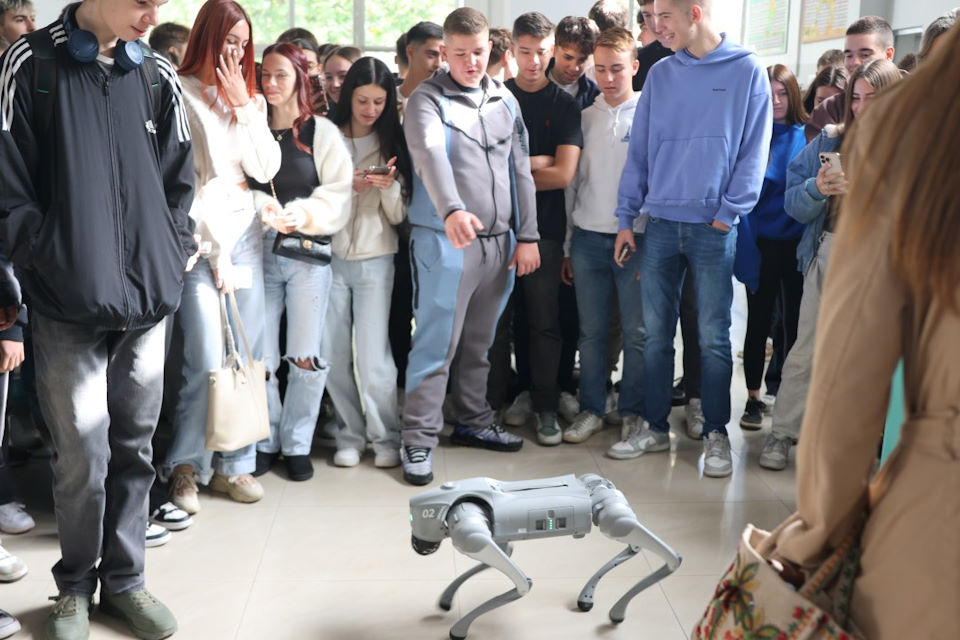
At the Technical Campus, the Faculty of Mechanical Engineering showcased the potential of mechatronics, industrial robotics, automation and production engineering. Through workshops and demonstrations, visitors also explored industrial design, motor vehicles, engineering materials and welding technologies. The Project Hub exhibition put student projects and creative engineering solutions in the spotlight, while the EU Corner highlighted European support for science and innovation in engineering.
The Faculty of Electrical Engineering and Information Technologies (FEIT) brought energy science and modern digital technologies closer to the public. Topics included renewable electricity generation, Power-to-X technologies, machine learning and computer architectures. At the Faculty of Computer Science and Engineering (FINKI), the focus was on digital transformation, artificial intelligence and cybersecurity, with a panel discussion and presentations dedicated to research and innovation projects.
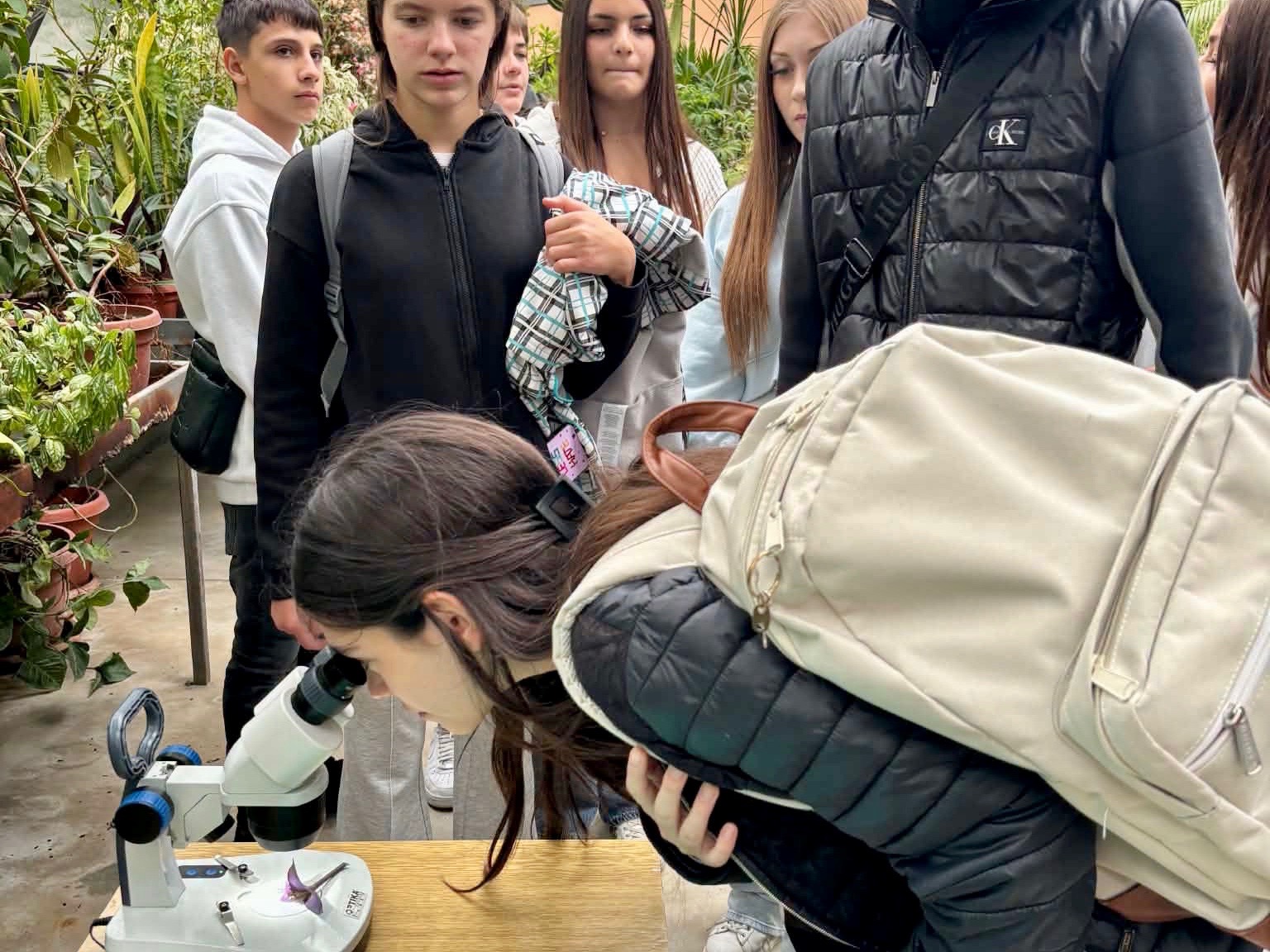
Curious visitors also had the opportunity to explore the natural sciences. The Faculty of Natural Sciences and Mathematics (PMF) opened its Botanical Garden, Creative Mathematics Laboratory and Seismological Observatory to visitors, while also introducing them to geospatial platforms such as Google Maps, Google Earth Pro and QGIS. Data science and its applications in business were explored through an interactive workshop at the Faculty of Economics entitled “Disruptions Can Be Fun – Discover What the Numbers Hide with Business Analytics.”
Bitola: Science Through Time, Art and the Starry Sky
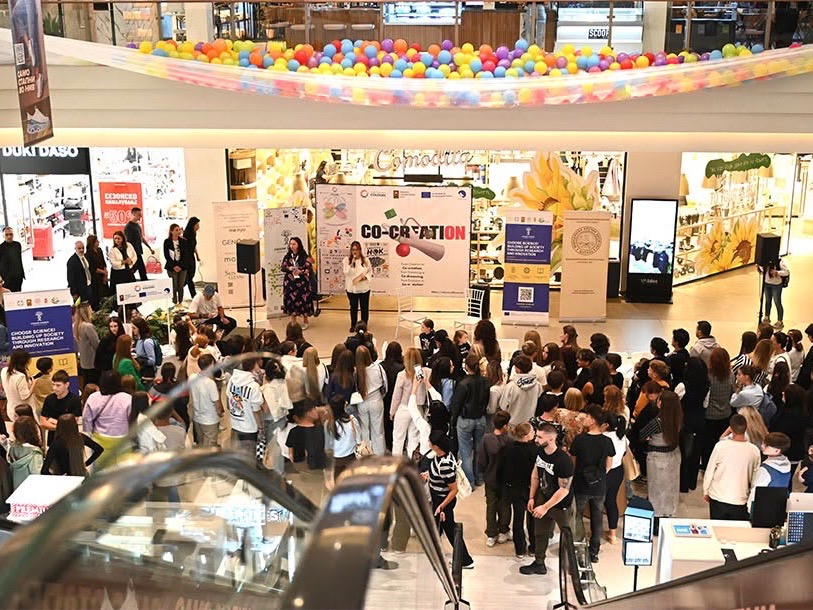
Bitola was one of the main centres of this year’s event, with a rich programme organised by St. Kliment Ohridski University (UKLO) in cooperation with COLORS. The activities began on 24 September at Bliss Mall, where visitors took part in a scientific treasure hunt. Certificates were also awarded to around 40 secondary school students and their mentors for their works on the theme of “Metamorphosis”, created as part of the “Roots and Wings” competition.
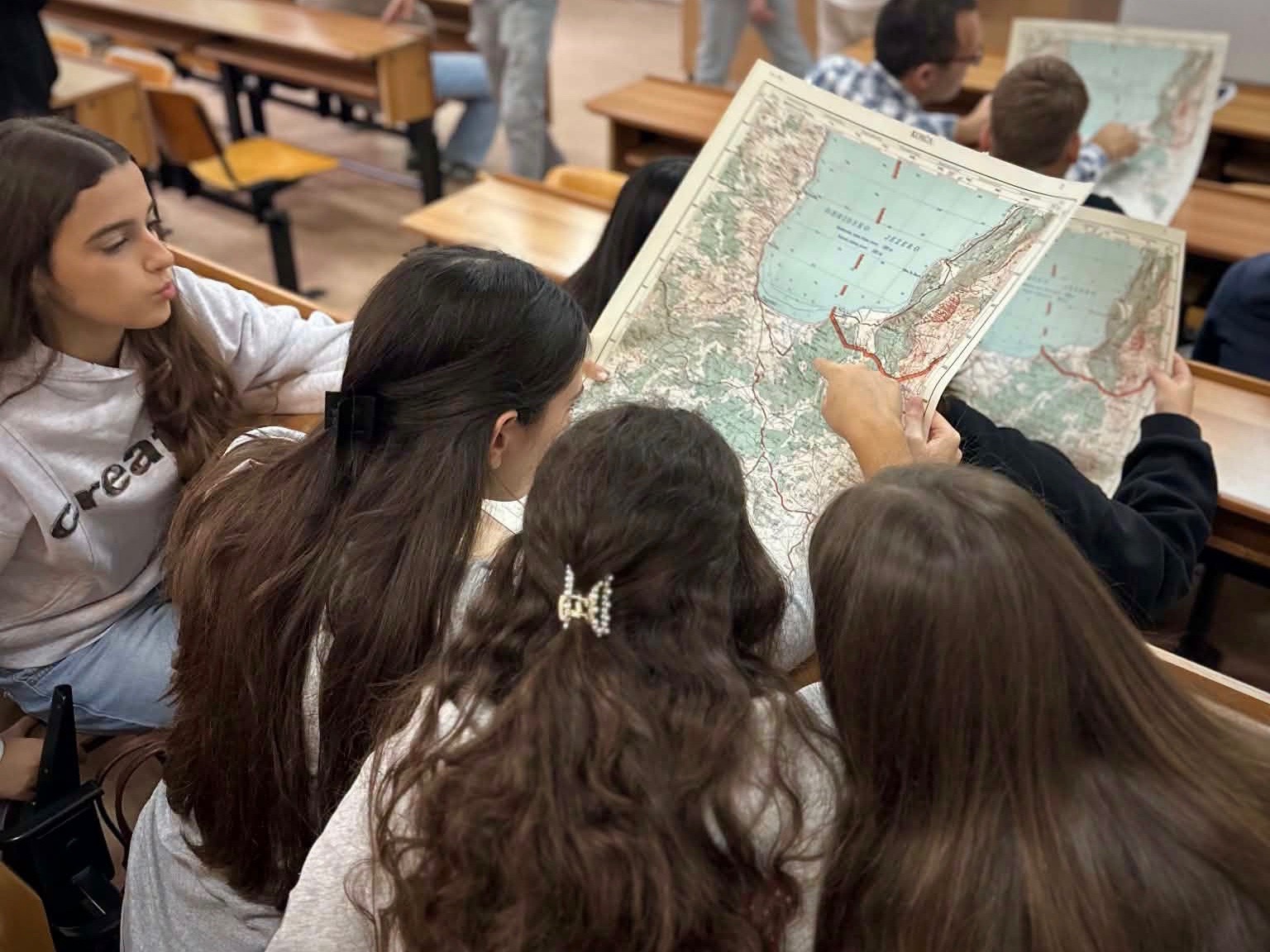
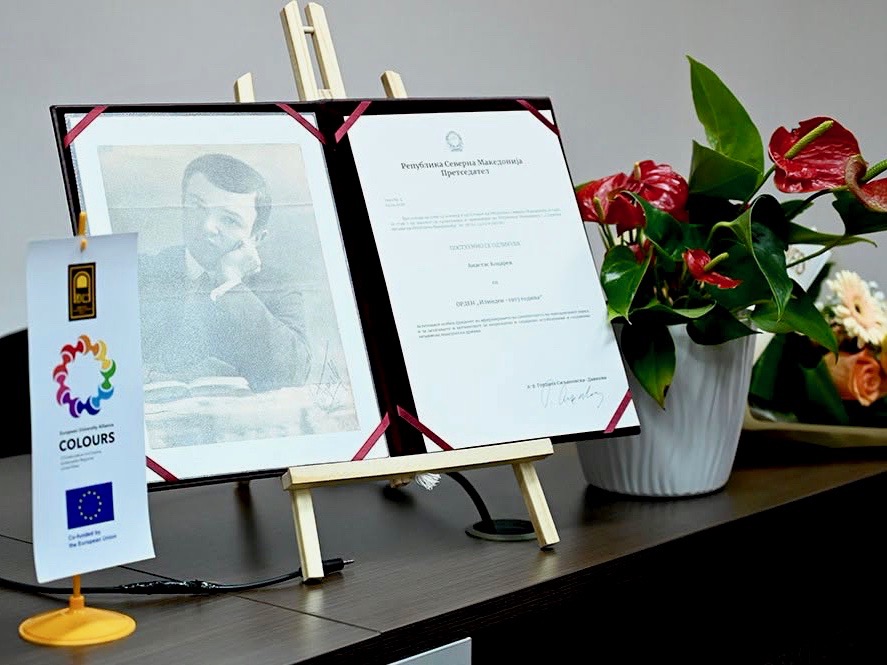
The main event on 25 September took place at the St. Kliment Ohridski University Library in Bitola. A special place in the programme was reserved for a tribute to Dr Anastas Kocarev, a Macedonian scientist and pioneer in radiology and oncology, also known for his collaboration with Marie Curie. Revisiting his scientific legacy offered an opportunity to highlight the importance of researchers whose discoveries pave the way for future generations.
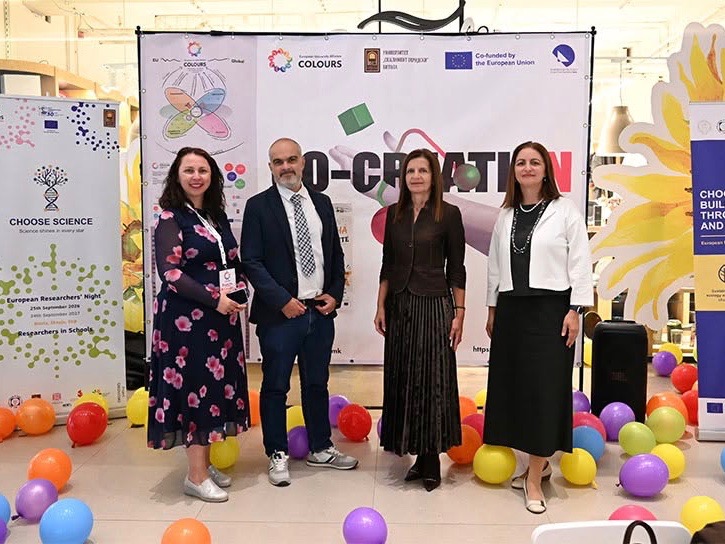
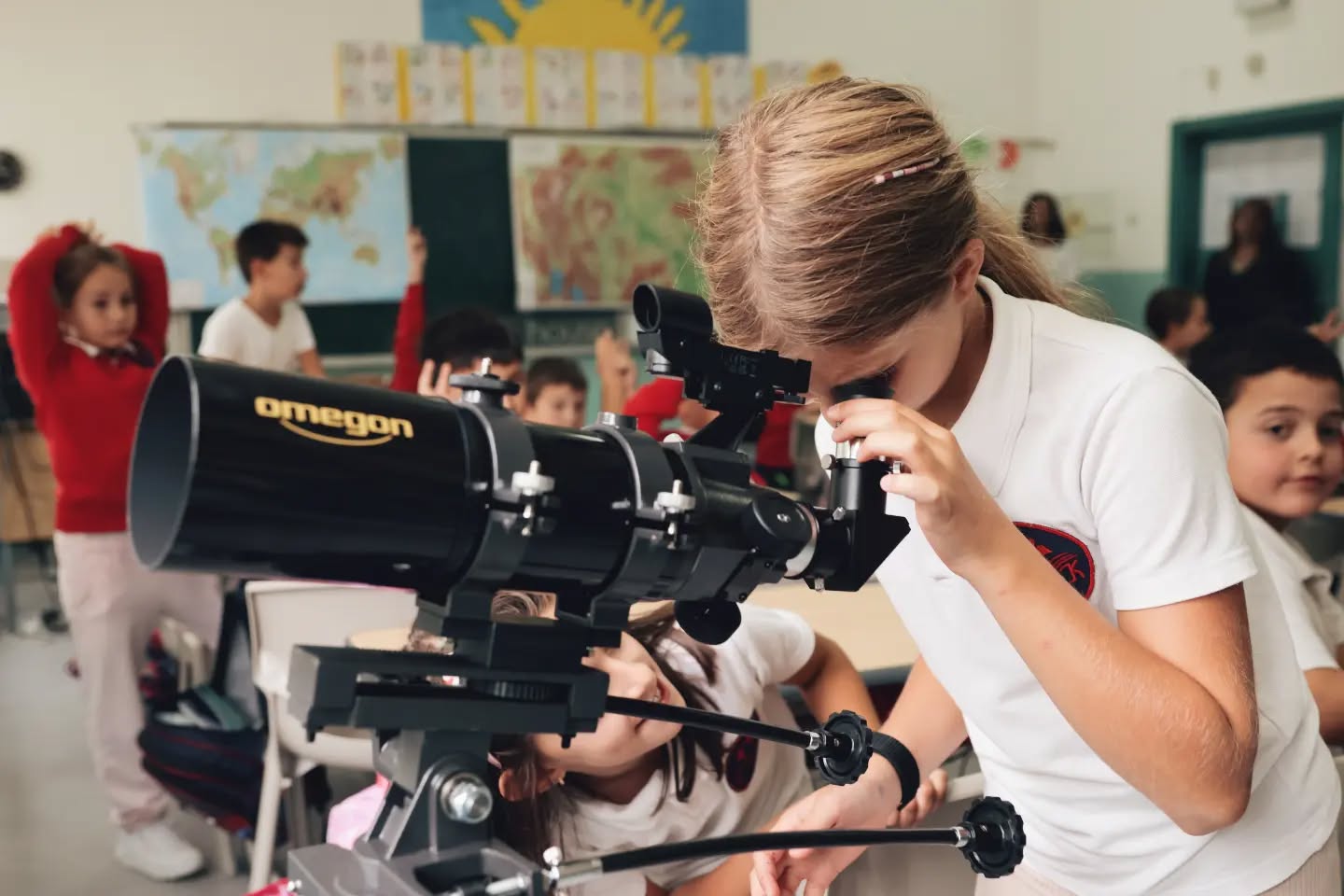
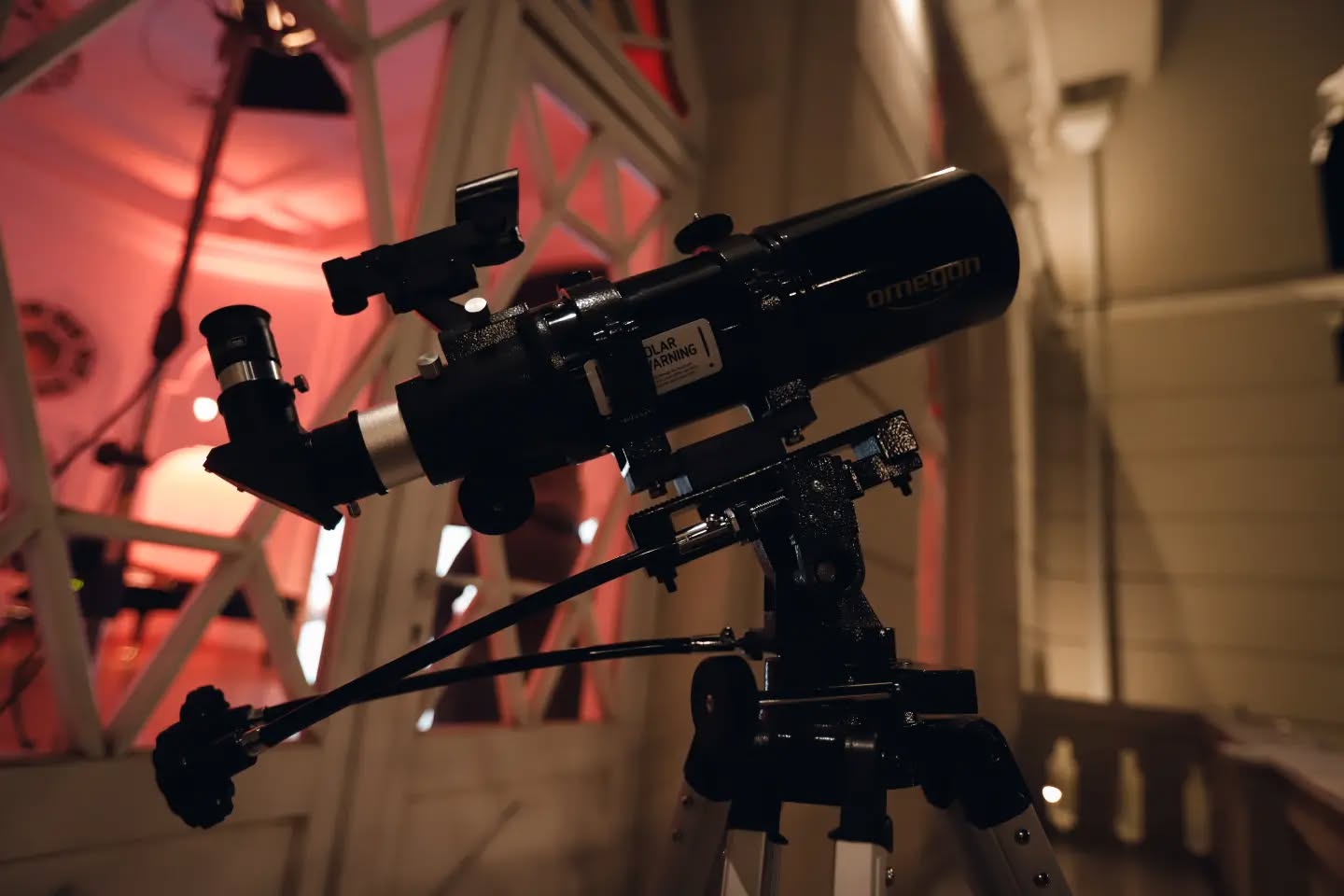
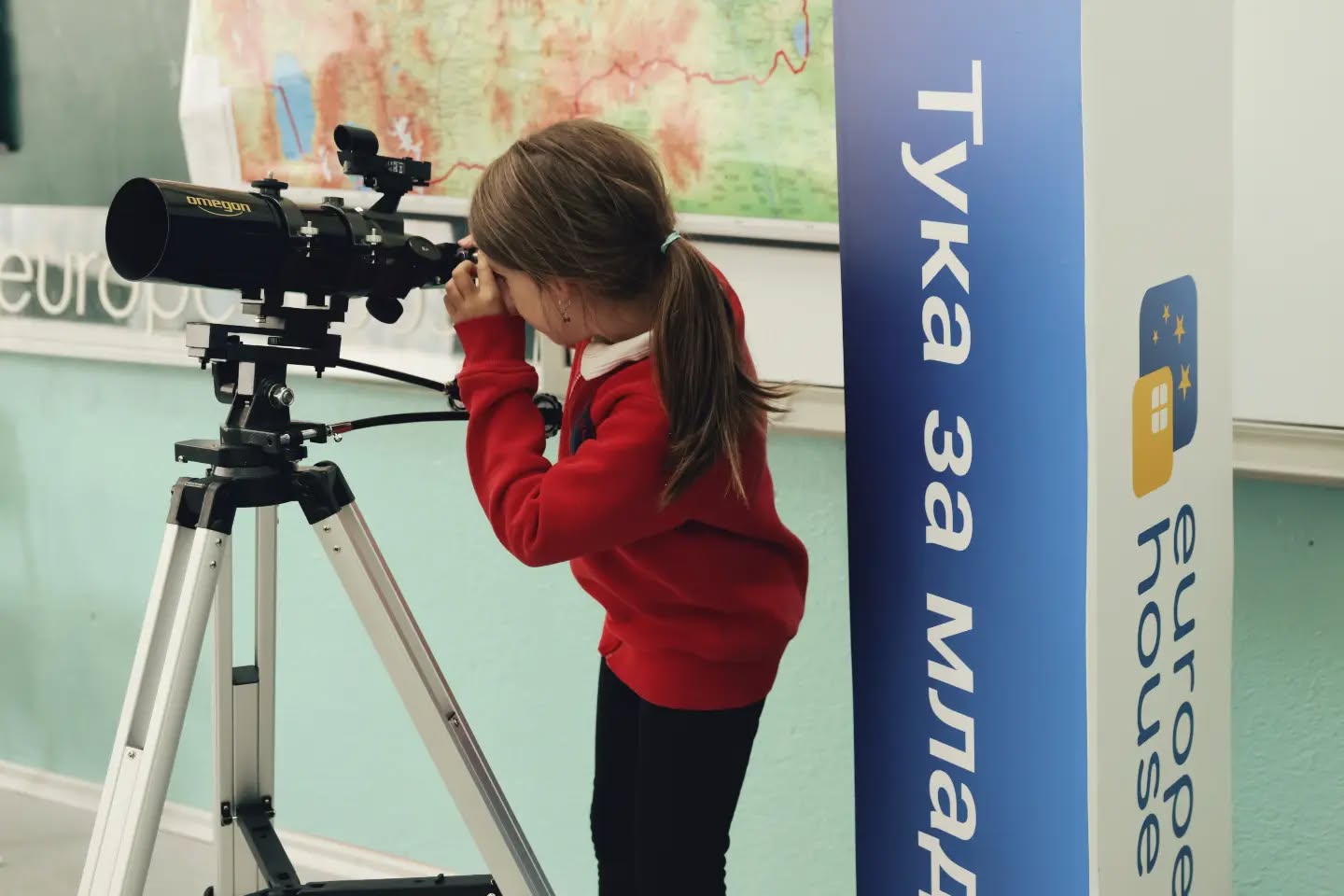
Europe House Bitola also joined the programme, inviting visitors to explore the universe from a different perspective. Through telescope observations, participants had the opportunity to learn how astronomers study celestial bodies, make precise measurements and discover distant worlds. A single encounter with the starry sky was enough to inspire new questions and spark an interest in astronomy.
Štip: Open Laboratories and Science Under the Stars
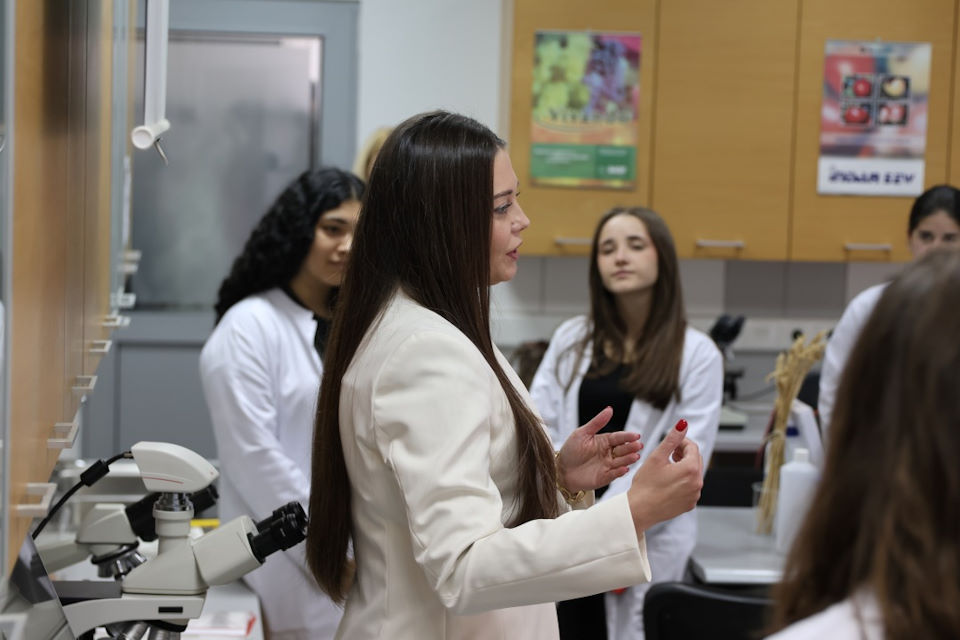
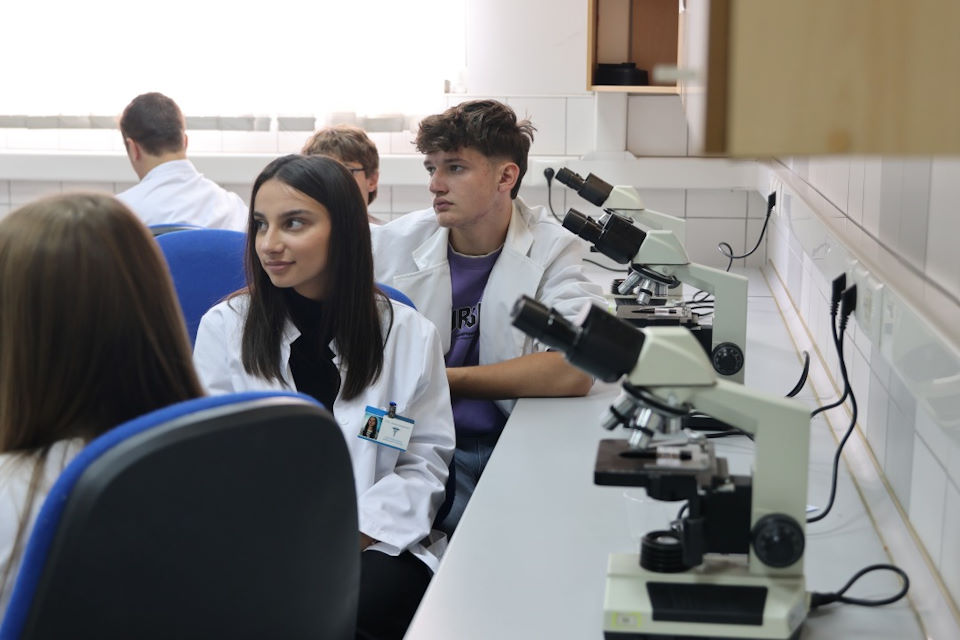
In Štip, Goce Delčev University opened its laboratories to secondary school students and all interested members of the public. Visitors had the opportunity to learn about ongoing research and explore different scientific fields through presentations by university professors.
The programme also included debates and expert lectures, culminating in the multimedia event “Art and Science Under the Stars”, held at the Jordan Mijalkov Sports Hall. Bringing science and art together offered a different way to experience research, demonstrating how creativity can also spark curiosity.
Ohrid: Scientific Conferences, Workshops, Lab Observations and Experiments
In Ohrid, European Researchers’ Night was also marked by scientific conferences and interactive workshops. On 25 and 26 September, conferences organised by the Society of Chemists and Technologists of Macedonia and the Physics Society of Macedonia took place, featuring an open poster session, experimental demonstrations and interactive activities for students. At the Hydrobiological Institute, the workshop “Living Organisms and Their Environment” gave participants the opportunity to explore aquatic habitats through laboratory activities and microscopic observations, discovering how water conditions affect living organisms and their adaptation to the environment.
Veles: When Science Becomes a Mystery to Solve
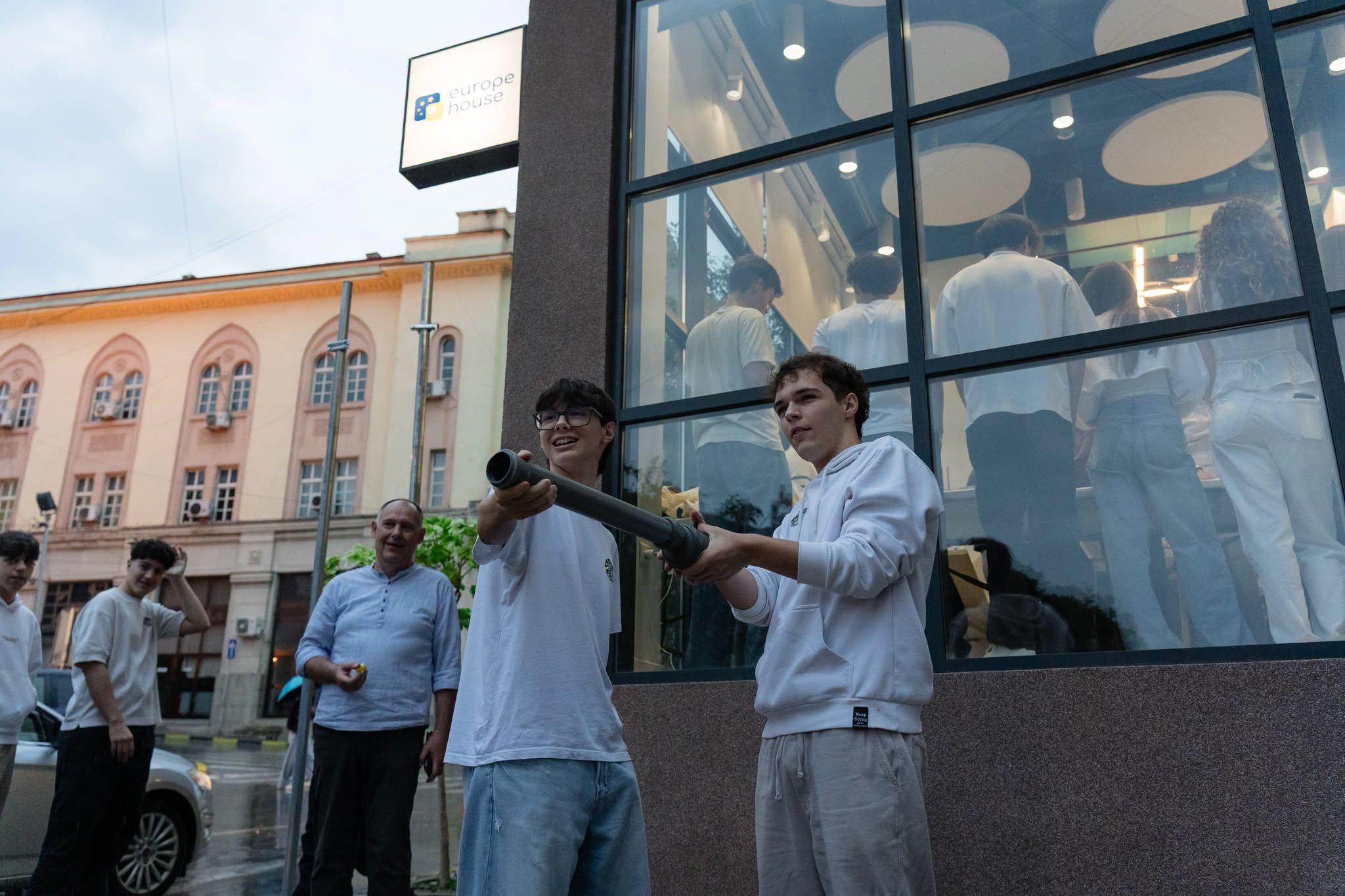
At Europe House Veles, science turned into a real investigation for European Researchers’ Night. Three teams, three scientific mysteries and one mission: to find out what really happened.
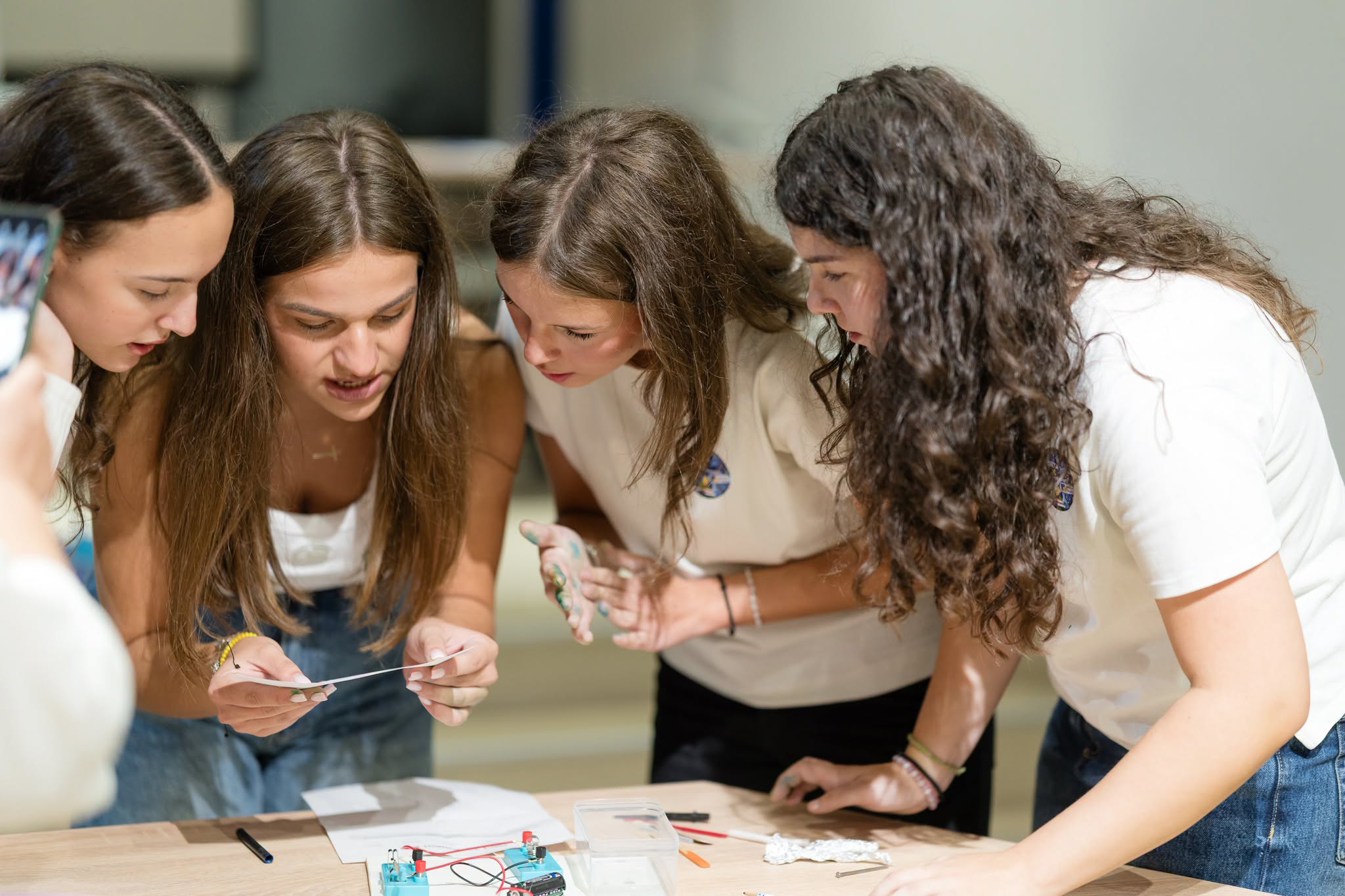
In collaboration with “St. Cyril and Methodius” Secondary School – Negotino, the young researchers examined evidence, conducted experiments in chemistry, biology and physics, connected the clues and, step by step, arrived at the final solution.
In this unusual scientific investigation, teachers took on the role of mentors, guiding the young researchers through the experiments while encouraging their curiosity, teamwork and desire to explore.
Strumica: Science as a Game and Team Challenge
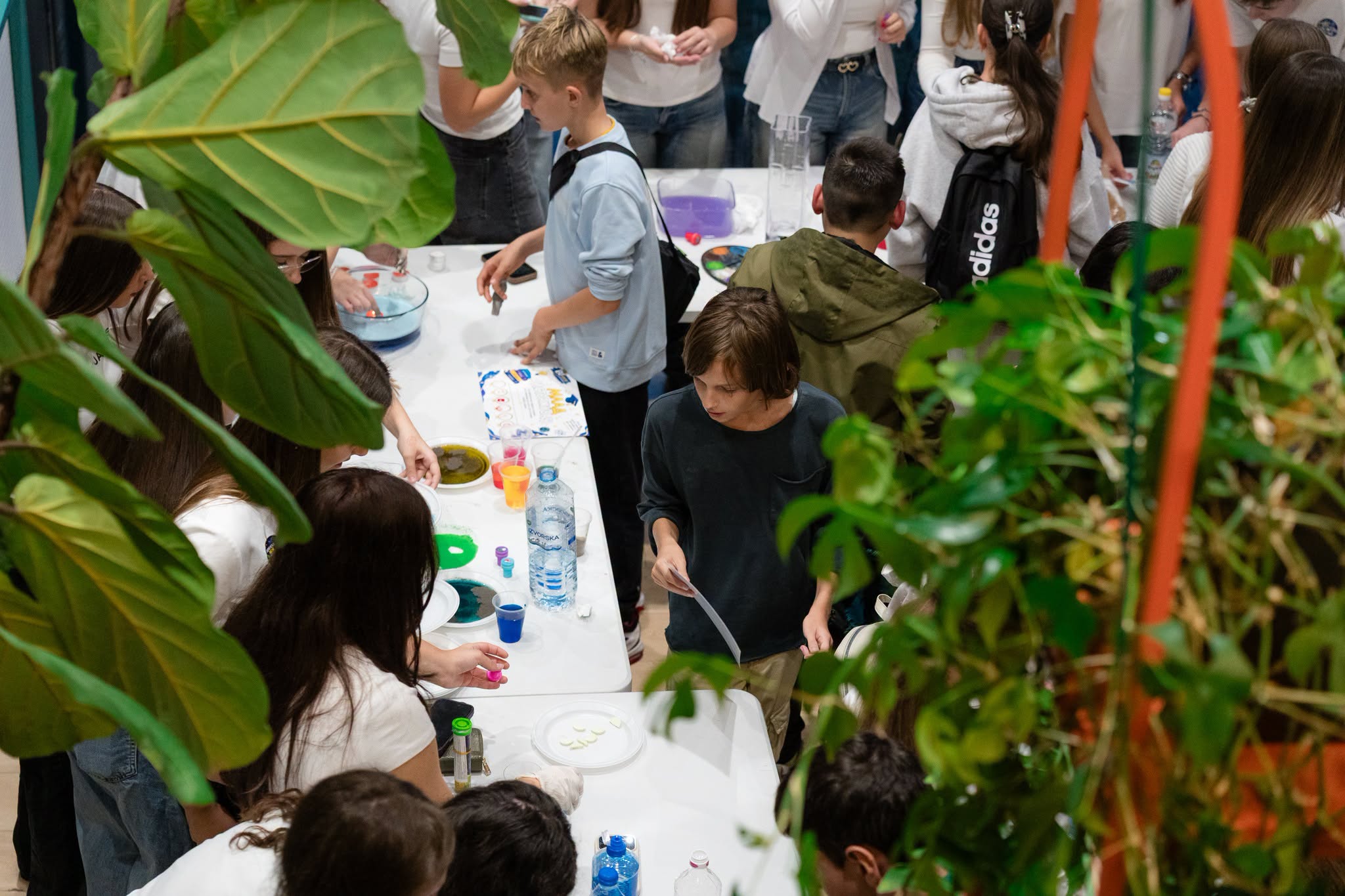
Europe House Strumica also joined European Researchers’ Night, organising a science trail in cooperation with Strumica’s primary and secondary schools. The science stations were presented by secondary school students and their mentors, who used experiments to give visitors a firsthand look at scientific principles in action.
For those looking for an extra challenge, there was also the Escape Room: “The Mad Scientist’s Laboratory.” Divided into teams, the young scientists put their logic, speed and teamwork to the test as they tried to solve puzzles and escape the laboratory.
Science Is for Everyone
From taking their first steps into the world of robotics to observing distant stars, European Researchers’ Night showed that science knows no boundaries of age, knowledge or profession. It is a space for asking questions, experimenting, exchanging ideas and discovering things that may once have seemed beyond our reach.
With free activities open to everyone, the event offered students, parents, teachers, researchers and entrepreneurs an opportunity to engage with science in a hands-on and enjoyable way. At the same time, by revisiting scientific heritage and showcasing contemporary research, it sent a strong message about the importance of science in building society.
Because science is not just something we learn from textbooks – it is something we explore, experience and share. And every new discovery begins with curiosity and a single question.